
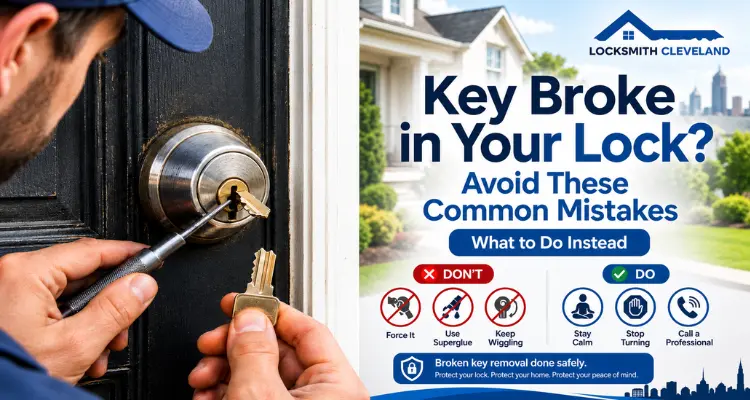
A key broke in lock is one of those problems that feels bigger than it actually is — especially when you’re standing at your Cleveland front door with half a key in your hand.
don’t panic, don’t yank on the remaining piece, and avoid DIY extraction attempts with household tools, since these usually push the broken piece deeper and turn a simple fix into a full lock replacement.
Here’s exactly what to do instead, step by step.
Why Do Keys Break in Locks?
Most broken keys aren’t a one-off accident — they’re usually the final result of ongoing wear that’s been building for a while.
Metal fatigue from repeated bending, an ageing or misaligned lock cylinder, and Cleveland’s humid coastal climate all contribute to keys weakening at their thinnest point over time.
“A snapped key rarely happens out of nowhere — it’s usually the lock and key finally losing a fight they’ve been having for months.”
What to Do the Moment Your Key Snaps
Stay calm and resist the urge to keep turning or wiggling it. Further movement often pushes the broken piece further into the cylinder, making removal much harder.
1. Check How Much of the Key Is Exposed
If a piece is still sticking out, you may be able to grip it gently with tweezers or needle-nose pliers — without forcing or twisting.
2. Stop If You Feel Resistance
If the piece won’t budge easily, stop immediately. Continuing to pull risks snapping it further or damaging the internal pins.
3. Avoid Superglue and Similar Household Tricks
A common mistake people make is trying to glue the two key pieces back together to use as a make-shift removal tool — this almost always makes things worse and can permanently damage the lock.
Expert tip: Never spray lubricant into the lock after a break — it can wash pins out of position and turn a simple extraction into a full cylinder replacement.
How to Get a Broken Key Out of a Lock Safely
Professional broken key extraction relies on purpose-built tools, not household items, and this is exactly why DIY attempts so often backfire.
What a Locksmith Actually Uses
- A broken key extractor tool designed to hook the key’s grooves
- Fine tension tools to hold the cylinder steady during removal
- Specialised lubricant safe for lock internals, used only when appropriate
Why DIY Extraction Can Cost You More
| DIY Attempt | Common Result |
|---|---|
| Tweezers with excessive force | Key pushed deeper into cylinder |
| Superglue trick | Glue residue jams the mechanism |
| Small screwdriver or pin | Scratched or bent internal pins |
| Repeated wiggling | Full lock replacement needed |
Our experience shows most emergency lock replacements from a broken key come from failed DIY attempts, not the original break itself.
Why Your Key Snapped in the First Place
Understanding the cause helps prevent a repeat, and it usually comes down to one of a few things:
- An old or worn key — thinning metal near the base is the most common failure point
- A stiff or misaligned lock — forcing a key to turn adds stress it wasn’t designed for
- Cheap or duplicated keys — lower-quality cuts are more prone to snapping under pressure
Lock repair after broken key removal is also a good moment to have the whole mechanism checked, since a lock that caused the break may keep causing problems with your new key too.
When It’s Time to Call a Professional
If the key won’t come out easily, or you’re locked out entirely with the broken piece still inside, this is genuinely a job for an emergency locksmith key extraction Cleveland service rather than continued DIY attempts.
A licensed locksmith can remove the fragment without damaging the cylinder, and often re-key or repair the lock on the same visit if needed.
Frequently Asked Question About Broken Key in Lock
1. Why do old keys break more often than new ones?
Metal fatigue builds up over years of use, thinning the key at its weakest point until normal turning pressure is enough to snap it.
2. Can a broken key damage the lock itself?
It can, particularly if extraction is attempted incorrectly, as forcing the fragment can scratch or bend the internal pins.
3. Is it possible to use a lock after a key breaks inside it?
Not safely — the lock needs to be cleared of the broken piece before it can be used again with a new key.
4. Do I need a new lock after a key snaps?
Not always. Many locks can be repaired once the fragment is removed, though very worn cylinders may need replacing.
5. How can I tell if my key is at risk of breaking?
Visible bends, stiffness when turning, or thinning near the base are all early warning signs worth acting on before it snaps.
Conclusion
A key snapping in the lock is stressful in the moment, but it’s rarely a disaster if you resist the urge to force things yourself.
Staying calm, avoiding household tricks, and calling a trusted local locksmith when the piece won’t budge easily will save you both time and unnecessary damage to your Cleveland home’s lock.