
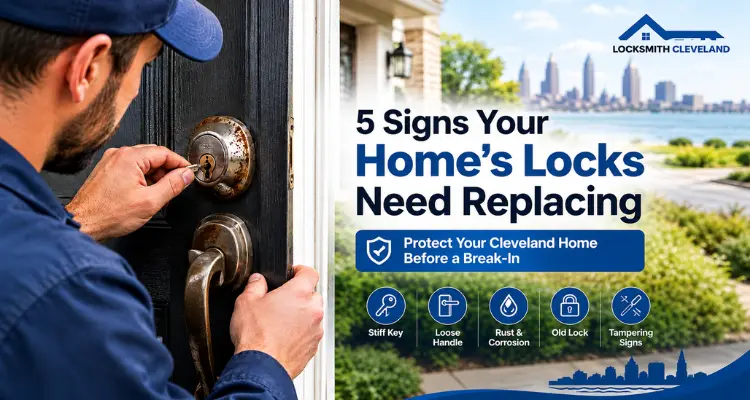
Knowing the signs your locks need replacing before something goes wrong is one of the simplest ways to protect your Cleveland home.
stiff keys, loose handles, visible rust, an ageing lock, and any sign of tampering are all clear indicators it’s time for an upgrade — not repair.
Here’s exactly what to look out for, and why it matters more than most homeowners realise.
Why Ignoring a Weak Lock Is Riskier Than You Think
A lock rarely fails without warning. It usually gives small, easy-to-miss signals for weeks or months before it becomes a genuine security risk.
In Cleveland’s coastal-adjacent climate, humidity and salt air speed up wear on hardware faster than in drier inland areas, making regular checks even more important.
“A struggling lock isn’t just an inconvenience — it’s your door quietly telling you it’s not doing its job properly anymore.”
5 Signs It’s Time to Replace Your Locks in Cleveland
Sign 1: The Key Feels Stiff or Sticks
When to replace door locks often starts right here — with a key that used to turn smoothly now needing extra force or a wiggle to work.
This usually points to internal wear on the pins or cylinder, and it tends to get worse, not better, over time.
Expert tip: Spraying WD-40 into a stiff lock is a common mistake — it attracts dust and grime, making the problem worse within months.
Sign 2: The Door Handle or Lock Feels Loose
A wobbly handle or a bolt that doesn’t sit firmly in the frame is a classic worn out lock symptom, and it’s more serious than it looks.
A loose lock is significantly easier to force open, even by an opportunistic intruder without any real tools or experience.
What Loose Hardware Usually Means
- Screws have worked loose from repeated use
- Internal components have worn beyond adjustment
- The strike plate no longer aligns properly with the frame
Sign 3: Visible Rust or Corrosion
Rusty lock replacement is a genuinely common issue for homes near the Redlands coastline, where salt-laden air accelerates metal corrosion.
Rust doesn’t just look bad — it weakens the internal mechanism and can cause a lock to seize completely, sometimes at the worst possible moment.
Sign 4: Your Lock Is Simply Old
Locks don’t last forever, even with perfect care. Most standard residential locks are designed for roughly seven to ten years of regular use before internal wear catches up with them.
If your Cleveland home still has its original locks from when it was built or last renovated, it’s worth having them assessed, particularly if the property has changed hands since.
Home security lock upgrade decisions often get put off simply because the lock still technically works — but “still works” and “still secure” aren’t the same thing.
Sign 5: Signs of Attempted Tampering
Scratches around the keyhole, a bent strike plate, or a door lock not working properly after someone else has used a key can all point to attempted tampering, not just normal wear.
Signs of a break-in attempt are sometimes subtle, and homeowners often dismiss them as accidental damage rather than a genuine warning.
Expert tip: Always change your locks after buying a Cleveland home, even if the previous owner hands over “all” the keys — you can never be certain how many copies exist.
When to Repair vs When to Replace Your Locks
| Situation | Repair Usually Enough | Replacement Recommended |
|---|---|---|
| Slightly stiff key | Yes | No |
| Visible rust or corrosion | No | Yes |
| Loose handle, tightened once already | Maybe | Yes |
| Signs of tampering | No | Yes |
| Lock older than 7–10 years | No | Yes |
Conclusion
Your home’s locks work quietly in the background until the day they genuinely matter, so catching these five warning signs early is one of the easiest ways to stay ahead of a break-in rather than reacting after one. If your Cleveland home is showing even one of these signs, it’s worth having your locks properly assessed before it becomes an emergency rather than a simple upgrade.